A tree just came down on your house. Here's the short version: get everyone out and away from the structure, call 911 if power lines are involved, then call your homeowner's insurance, photograph everything before any work starts, and bring in a licensed and insured tree service for the removal. Do those five things in that order and you'll protect your family, your claim, and your roof.
Alpenglow Tree Care LLC is a licensed and insured tree service based in Broomfield, Colorado. We handle emergency fallen tree removal across Denver, the Northern Metro, the Front Range Foothills, and Colorado's High Country, including Summit County and Breckenridge — and tree-on-house calls go to the front of the line.
Step 1: Get Everyone Out — Is the House Safe to Be In?
Treat a tree on the house as a structural event, not a landscaping problem — Alpenglow Tree Care tells every caller the same thing: evacuate first, assess later. Get everyone, including pets, out of the house and well clear of the tree. A trunk resting on a roof is rarely done moving; shifting loads can bring down more of the structure or the rest of the tree.
Three hazards demand immediate action:
- Downed or contacted power lines. If the tree touched any line on the way down, assume every wire is live. Stay far back and call 911 and your utility. Never touch a tree that is in contact with a line — the tree itself can be energized.
- Structural damage. Cracked framing, sagging ceilings, or doors that suddenly won't close mean the structure has shifted. Don't go back inside for belongings.
- Gas smell. A falling tree can crack a gas line or shear a meter. If you smell gas, leave immediately, don't flip switches or light anything, and call your gas utility from a safe distance.
If none of those apply — say a large limb punched into the garage roof but the living space is intact — you can stay on site, but keep people away from the damaged area until a professional has looked at it.
Step 2: Call Your Insurance and Document Everything
Before any cleanup starts, Alpenglow Tree Care recommends two calls and a camera: call your homeowner's insurance to open a claim, and photograph everything exactly as it sits. Once a crew starts cutting, the scene changes — and your adjuster needs to see what the tree did, not what's left after removal.
Shoot wide photos of the whole scene, close-ups of every point where the tree contacts the structure, interior shots of any ceiling or wall damage, and the base of the tree where it failed. Video walkthroughs help too. Save receipts for anything you spend on emergency measures — tarps, board-up materials, a hotel night if the house isn't livable.
On coverage, the general pattern is this: when a tree falls on a covered structure — house, garage, deck, fence — homeowner's policies typically cover removing the tree from the structure and repairing the damage, subject to your deductible. When a tree falls in the yard and hits nothing, removal is often not covered, or capped at a modest amount. Those are general patterns, not promises; policies vary, so confirm your specific coverage and any removal limits with your insurer before authorizing work. Ask whether they require an adjuster visit before removal or whether documented photos are enough — after big Front Range storms, adjusters get backed up, and most carriers will let removal proceed once the damage is documented.
Step 3: Tarp, Board Up, and Stop the Water
The tree made the hole; the water that follows often does more damage — which is why Alpenglow Tree Care treats emergency tarping as part of the removal job, not an afterthought. A punctured roof in Colorado can take on an afternoon monsoon thunderstorm or an overnight snow load within hours of the tree coming down.
Most policies expect you to take reasonable steps to prevent further damage after a loss — insurers call it mitigation, and emergency tarping is the classic example. That means tarping the roof opening, boarding broken windows, and moving furniture and electronics out from under the breach. It does not mean climbing onto a roof that has a tree on it. If the hole can't be reached safely from a ladder at the edge, leave it for the crew — a proper removal team tarps the opening as soon as the tree is off.
Inside, put buckets under active drips, pull back carpet if water is pooling, and run fans once the weather clears. Fast drying is the difference between a patch-and-paint repair and a mold remediation bill.
Step 4: Why Do You Need a Licensed, Insured Tree Service for a Tree on a Roof?
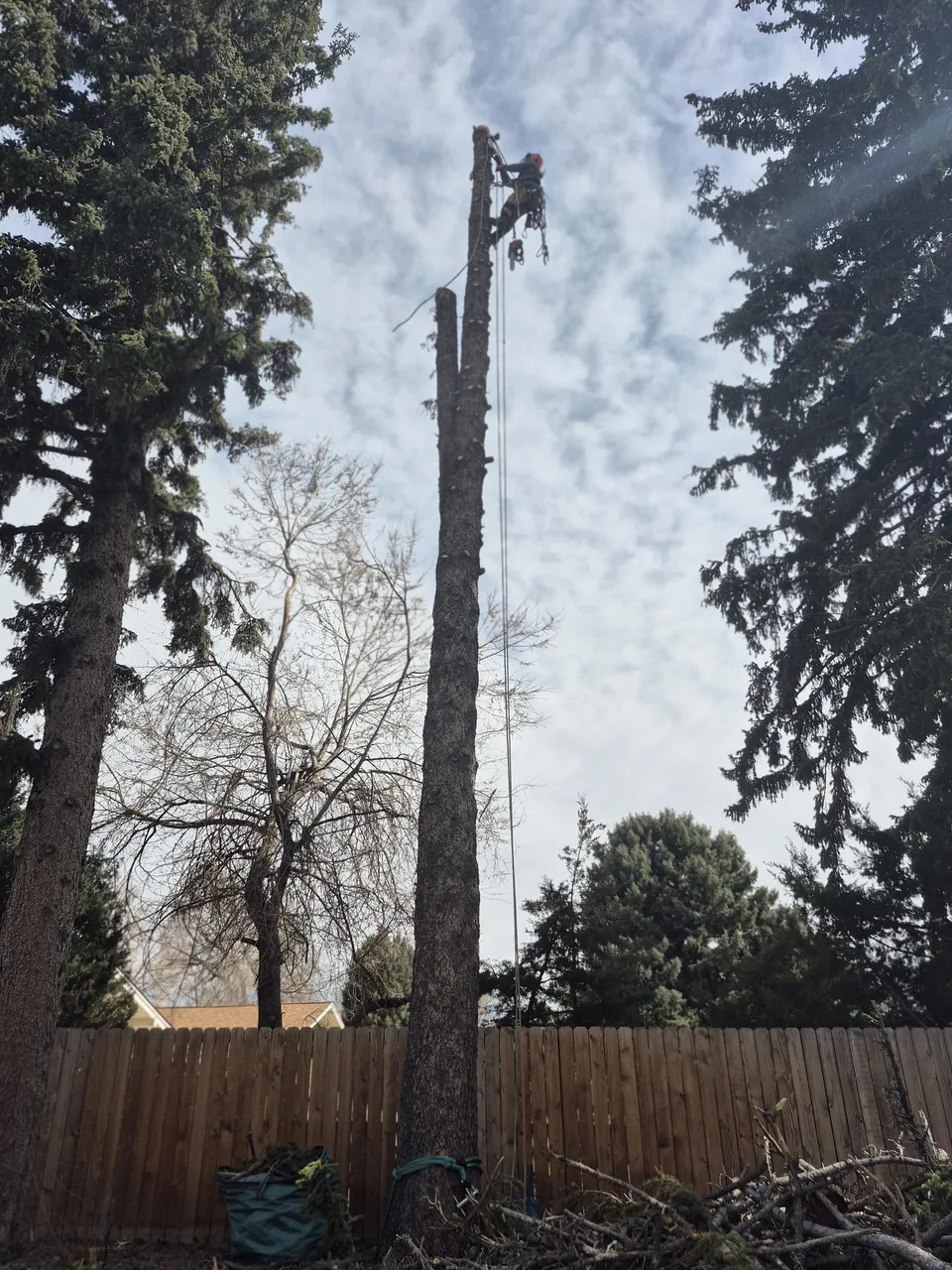
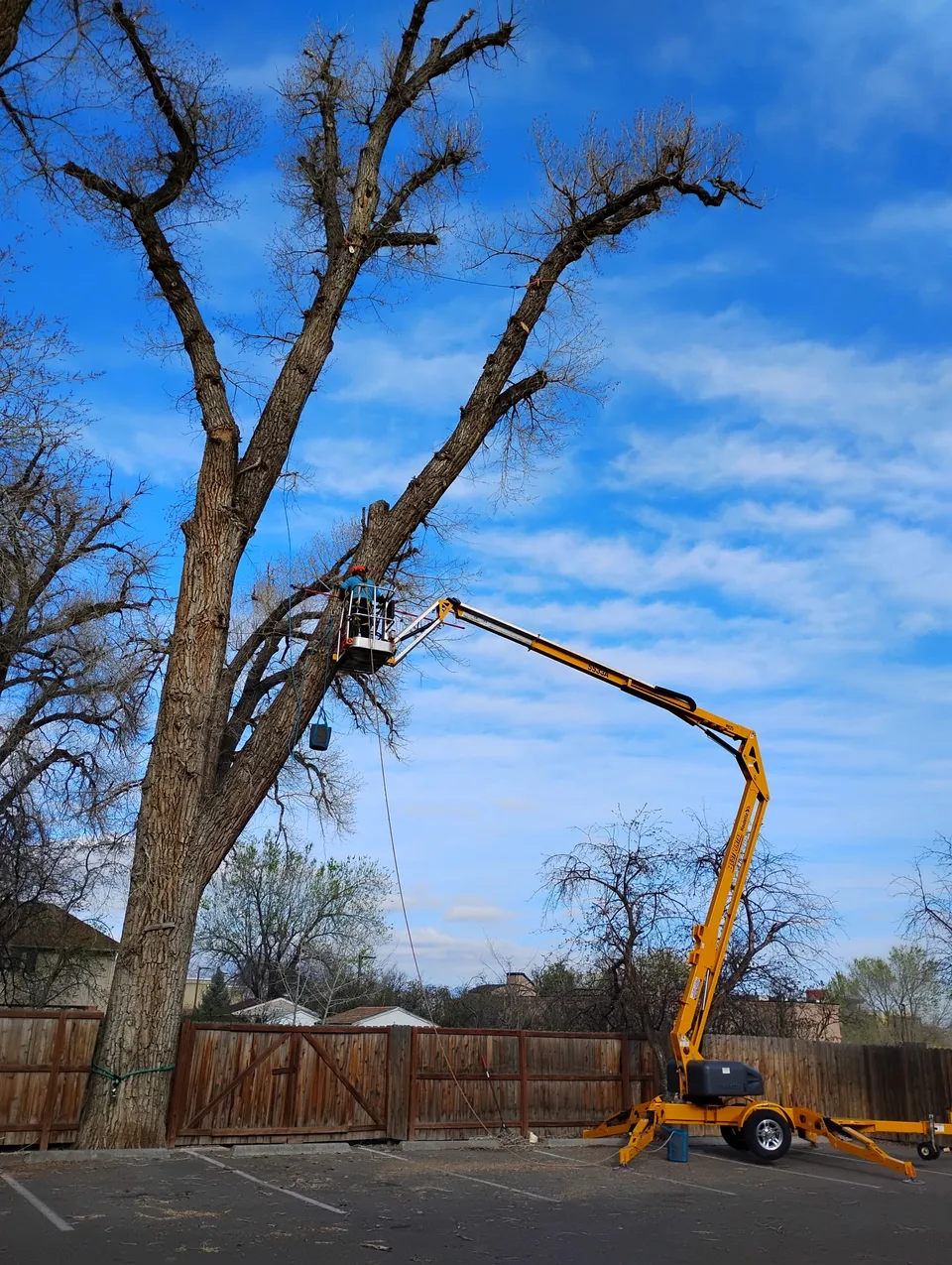
Tree-on-roof removal is rigging work, not chainsaw work — and it's the reason Alpenglow Tree Care brings cranes and rigging gear to structure calls instead of just saws. A trunk lying on your roof is under load and tension. Cut it in the wrong place and the released weight can drop through the sheathing, roll into a wall, or spring back at the cutter. The correct approach lifts weight off the structure in controlled sections: a crane or rigging lines support each piece before it's cut, so nothing ever falls onto the roof that's already damaged.
Here's what to expect when a qualified crew arrives: a walk-around to map the tree's contact points and tension, a rigging or crane plan, sectional removal starting from the top of the load, tarping of the opening, and a ground assessment of what the tree took with it. On a typical house strike, the tree is off the structure the same day. You can see how we approach this work on our storm cleanup service page, and the removal process itself on our tree removal page.
One warning worth repeating: never let an uninsured "chainsaw guy" onto your roof. If an uninsured worker gets hurt on your property, the liability can land on you as the homeowner. If he drops a trunk section through your kitchen, there's no insurance behind him to pay for it — and botched removal work can complicate your own claim. Ask for proof of liability insurance and workers' compensation before anyone touches the tree. A legitimate company hands it over without hesitation; Alpenglow Tree Care carries both and provides certificates on request.
Step 5: Cleanup, Hauling, and Checking the Trees Still Standing
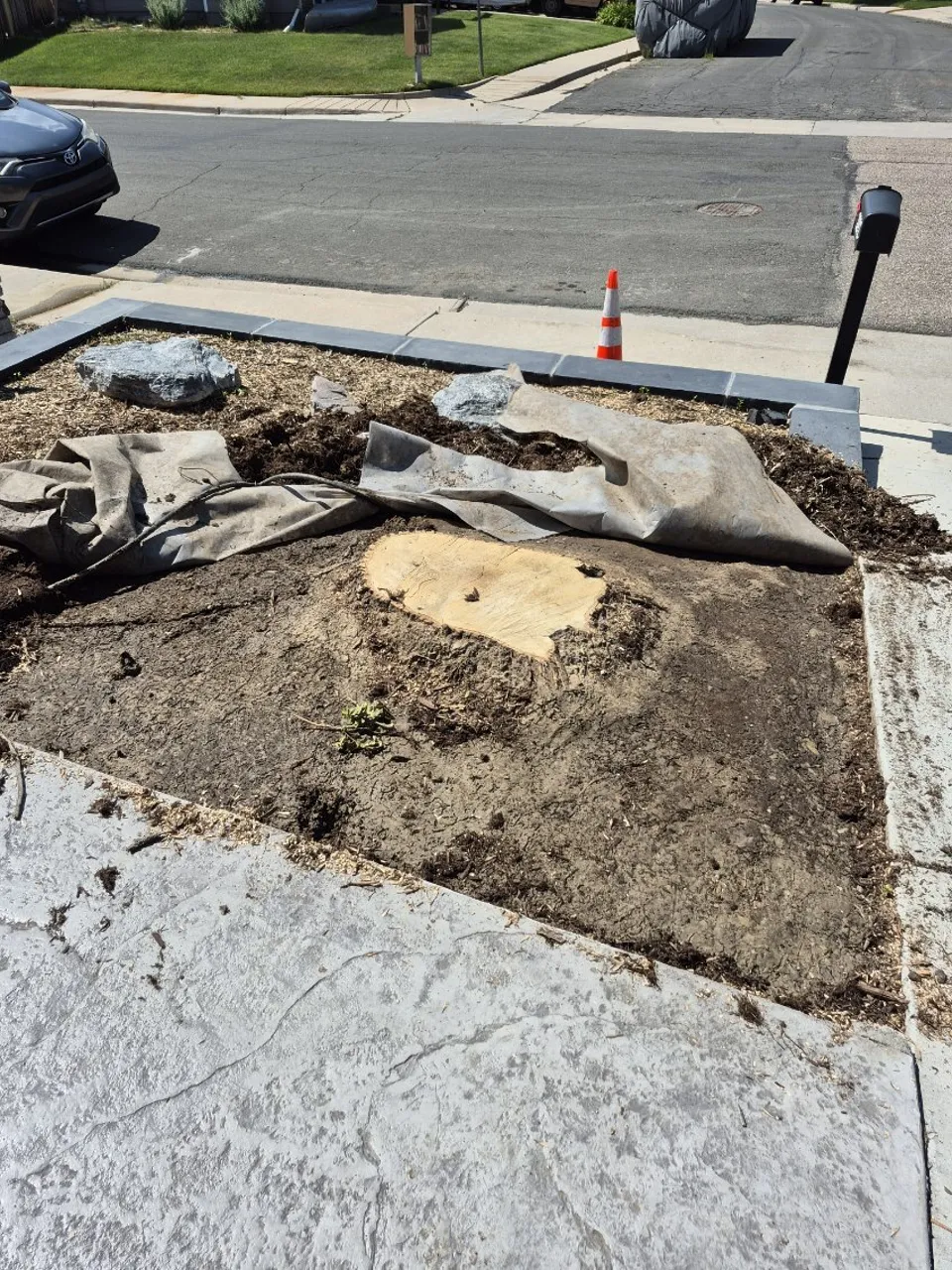
Once the tree is off the house, Alpenglow Tree Care finishes the job at ground level: bucking the trunk, chipping the brush, hauling the debris, and raking the site clean so roofers and contractors can start repairs immediately. A tree that hit a house usually leaves a surprising amount of wood behind — a mature cottonwood or spruce can fill multiple truckloads.
Then look up. The storm that dropped one tree stressed every tree around it. Colorado hits trees from three directions: heavy spring snows load leafed-out branches until limbs shear off, summer microbursts snap trunks that stood for decades, and the Front Range's winter downslope windstorms — with gusts past 80 mph off the foothills — push whole root systems out of wet or shallow soil. After any of those events, walk your property and check the survivors for new leans, cracked limbs hanging in the canopy, lifted soil at the root plate, and fresh trunk splits. Our guide to the signs a tree needs removal covers exactly what to look for — and if a damaged tree does have to come down on your schedule rather than the storm's, planned removal costs far less than an emergency call, as we break down in our Colorado tree removal cost guide.
Alpenglow Tree Care runs storm cleanup crews across the Denver metro and into the High Country whenever weather moves through — if a storm has left your property a mess, call (303) 801-7513 and we'll get you on the schedule.
Common Questions About Trees Falling on Houses
Who pays when a neighbor's tree falls on my house?
In most cases, your own homeowner's insurance covers damage to your house — regardless of whose tree fell. The exception is negligence: if the neighbor knew the tree was dead or hazardous and ignored it, their policy may be pursued instead. Document the tree's condition with photos and confirm the specifics with your insurance company, since every policy and claim is different.
Does homeowner's insurance cover fallen tree removal?
Generally, yes — when the tree hit a covered structure like your house, garage, or fence, policies typically pay for removing the tree from the structure and repairing the damage, subject to your deductible and policy limits. A tree that fell in the yard without hitting anything is often not covered, or covered only up to a small cap. Confirm your specific coverage with your insurer before authorizing work.
How fast can an emergency tree removal crew get to my house?
For a tree on an occupied home, reputable tree services prioritize the call and can often respond same-day. After a major Front Range windstorm or heavy snow event, demand spikes and response may take longer — which is why you should call early and get on the schedule. Alpenglow Tree Care serves Denver, the Northern Metro, the Foothills, and Summit County, and treats tree-on-structure calls as top priority.
Is a leaning tree an emergency?
A tree that suddenly started leaning after a storm is an emergency — it usually means root failure, and the tree can come down with little warning. Look for lifted or cracked soil at the base. A tree that has leaned the same way for years is typically stable, but any new lean toward a house, driveway, or power line deserves a same-day professional assessment.
Last Updated: August 2026