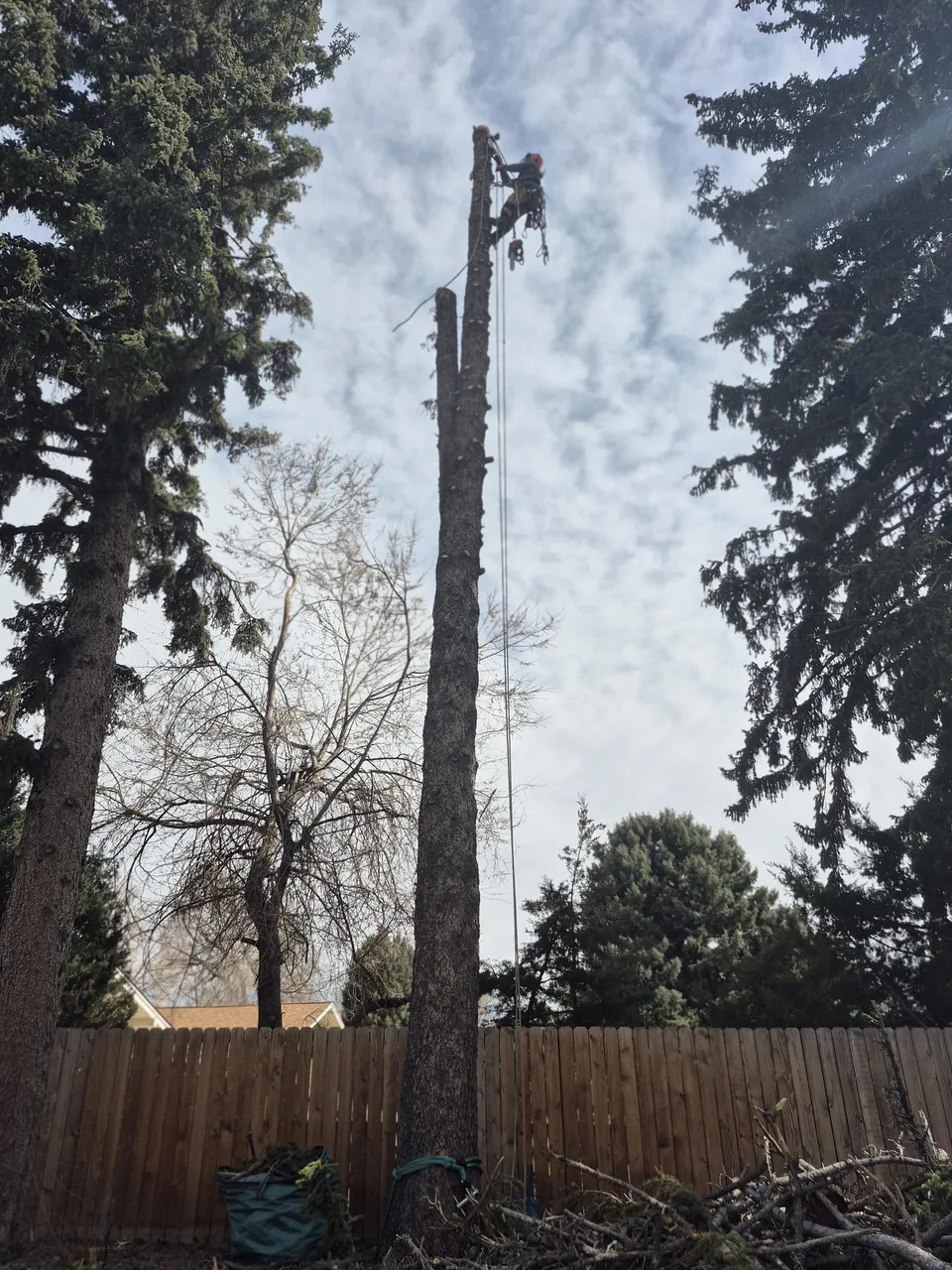
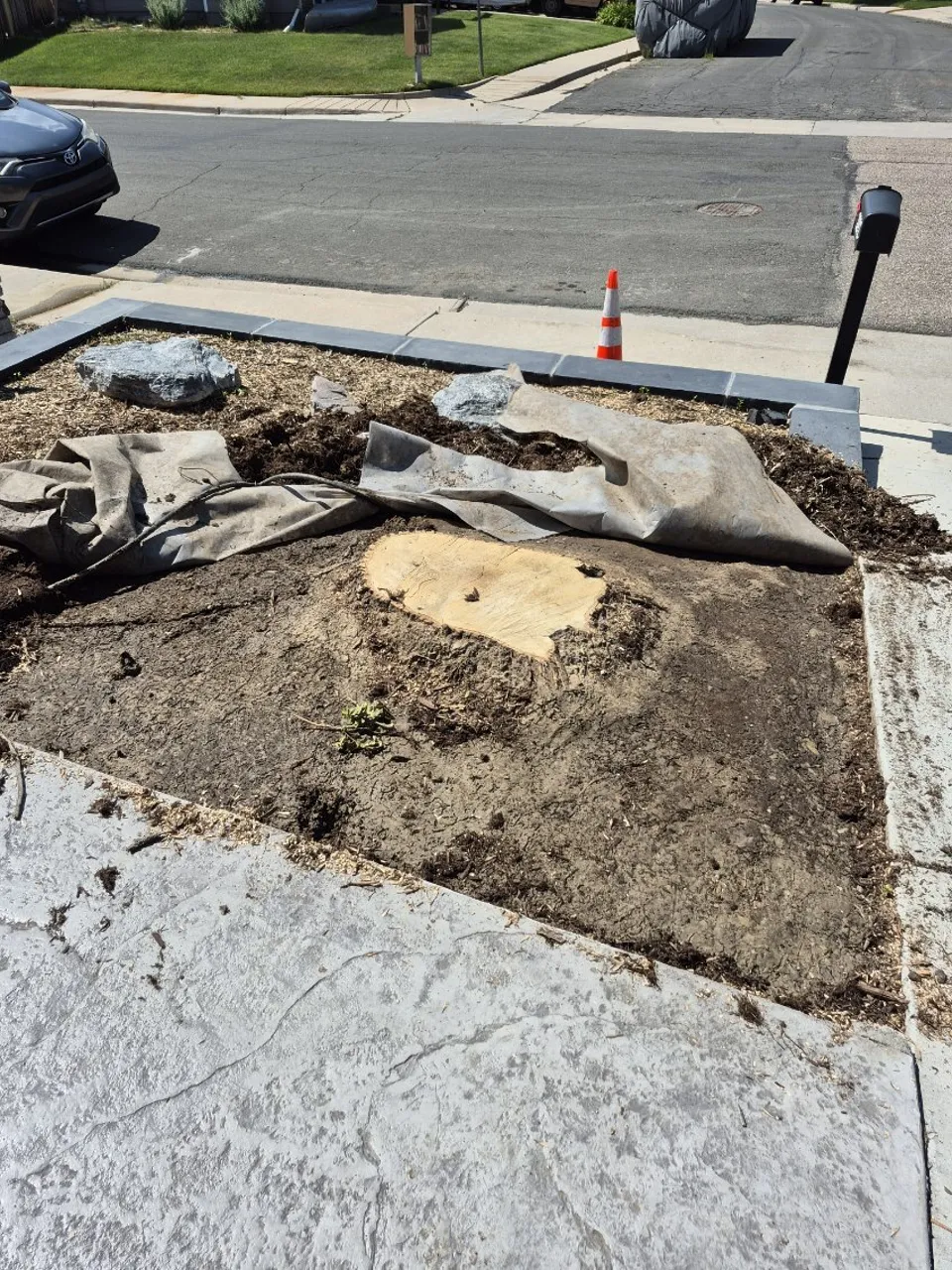
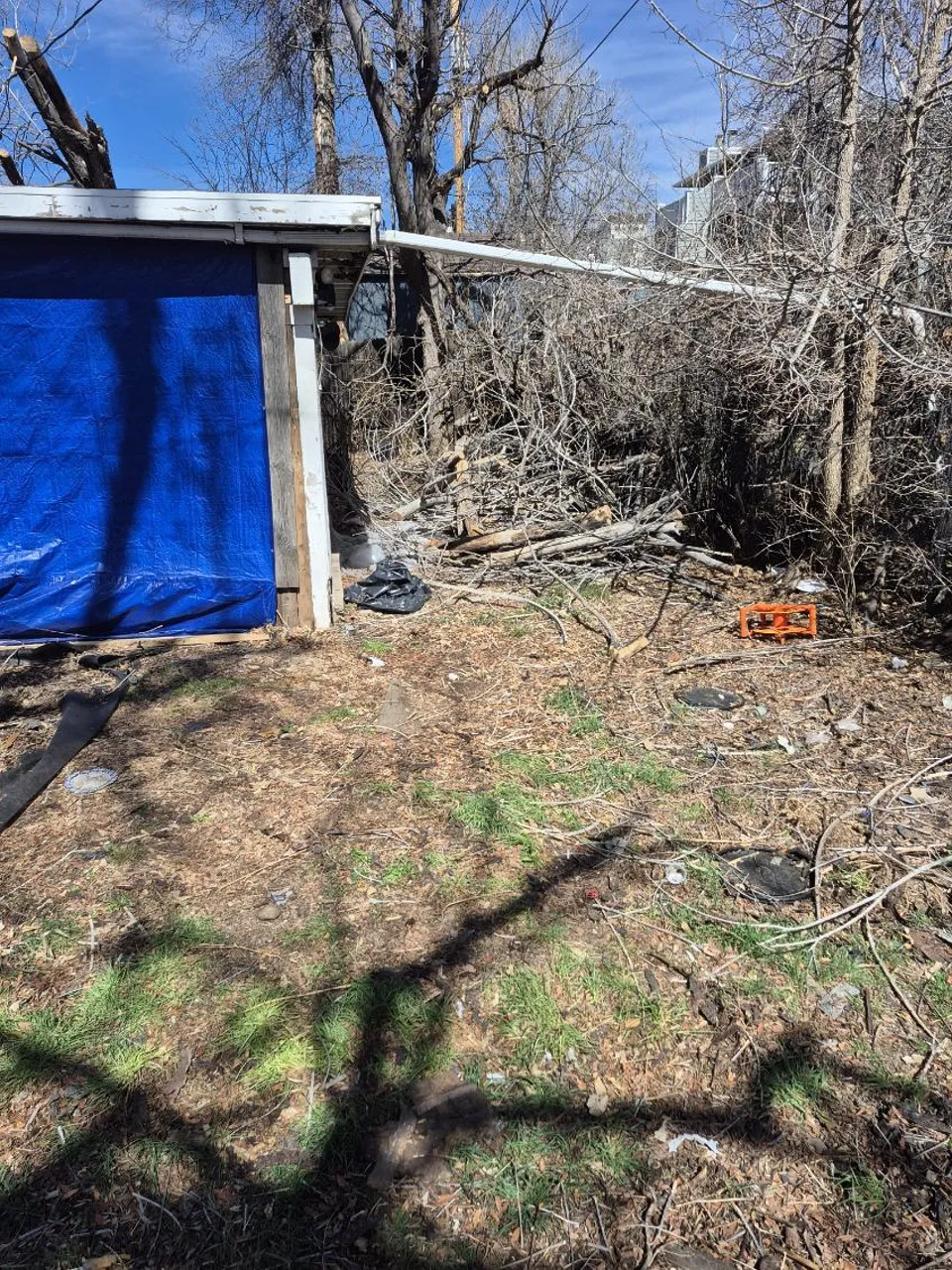
Defensible space is the managed buffer between your home and the surrounding vegetation that slows a wildfire — or drops it out of the treetops — before it reaches the structure. Colorado uses a three-part home ignition zone model: the Immediate zone (0-5 feet), the Intermediate zone (5-30 feet), and the Extended zone (30-100+ feet). Each zone has different rules, and the work gets less intensive the farther you move from the house.
Alpenglow Tree Care LLC is a licensed and insured tree service company based in Broomfield, Colorado, serving Denver, the Northern Metro, the Front Range Foothills including Boulder, Nederland, and Evergreen, and Colorado's High Country including Summit County and Eagle County. Fire mitigation is one of our core services: we assess properties against the zone model, remove the trees that matter most, and leave the site cleaner than we found it.
How Do the Three Defensible Space Zones Work?
Alpenglow Tree Care builds every mitigation plan around the home ignition zone model promoted by the Colorado State Forest Service. The zones are measured outward from your home's exterior walls and attached decks:
- Immediate zone (0-5 feet). This is the noncombustible zone. Nothing flammable belongs against the house — no wood mulch against siding, no shrubs under windows, no firewood stacked on the deck. Replace vegetation here with gravel, pavers, or bare soil, and make sure no tree branches overhang the roof. Most homes lost in wildfires ignite from embers landing in this zone, not from a wall of flame.
- Intermediate zone (5-30 feet). Trees can stay here, but they need discipline: spacing between individual trees, ladder fuels removed underneath, and lower branches limbed up. Group plantings into small, well-spaced islands separated by gravel paths, lawn, or rock rather than one continuous band of vegetation.
- Extended zone (30-100+ feet). The goal shifts from stopping fire to slowing it and forcing it out of the canopy. That means thinning dense stands, opening space between tree crowns, and cleaning up deadfall, slash, and heavy accumulations of needles and branches. On slopes, this zone should extend farther than 100 feet.
You don't need a moonscape. A well-mitigated foothills lot still looks like Colorado — it just doesn't hand a fire a continuous path from the grass to your roofline.
What Are Ladder Fuels, and Why Does Limbing Up Matter?
Ladder fuels are the first thing Alpenglow Tree Care flags on a property walk: the vertical chain of vegetation that lets a ground fire climb into the canopy. Tall grass ignites a shrub, the shrub ignites the low branches above it, and suddenly a manageable surface fire becomes a crown fire — hotter, faster, and throwing embers hundreds of yards downwind.
Breaking the ladder is straightforward tree work. We remove shrubs and small trees growing directly beneath larger ones, then limb mature trees up 6 to 10 feet from the ground — less on small trees, where a good rule is to never remove more than the lower third of the live crown. With the ladder gone, fire that enters your property tends to stay on the ground, where it burns cooler and firefighters can actually work it.
Crown spacing matters just as much. As general guidance, aim for about 10 feet between the edges of tree crowns in the intermediate zone, widening as you move toward the extended zone — and wider still on slopes. These are rules of thumb, not code: the right spacing on your lot depends on species, slope, and what's uphill and downwind of the house.
Which Trees Near a House Should Go First?
Alpenglow Tree Care prioritizes removals in a consistent order, because most homeowners can't take every recommendation at once. First: dead trees, period. A standing dead conifer within 100 feet of a structure is pre-cured fuel with no defense mechanism left. If you're unsure whether a declining tree is past saving, our guide to the signs a tree needs removal walks through what we look for.
Second: beetle-kill. Colorado's foothills and High Country carry large stands of lodgepole pine and spruce killed by bark beetles, and those red-needled or gray, needle-less snags are standing hazard fuel — dry, resinous, and quick to torch. Summit County and Eagle County properties often have entire property lines of it. Beetle-killed trees also shed limbs and fall unpredictably, so they're a hazard on calm days too. (Insect pressure isn't limited to the high country — the emerald ash borer is producing the same kind of standing dead fuel in Front Range neighborhoods.)
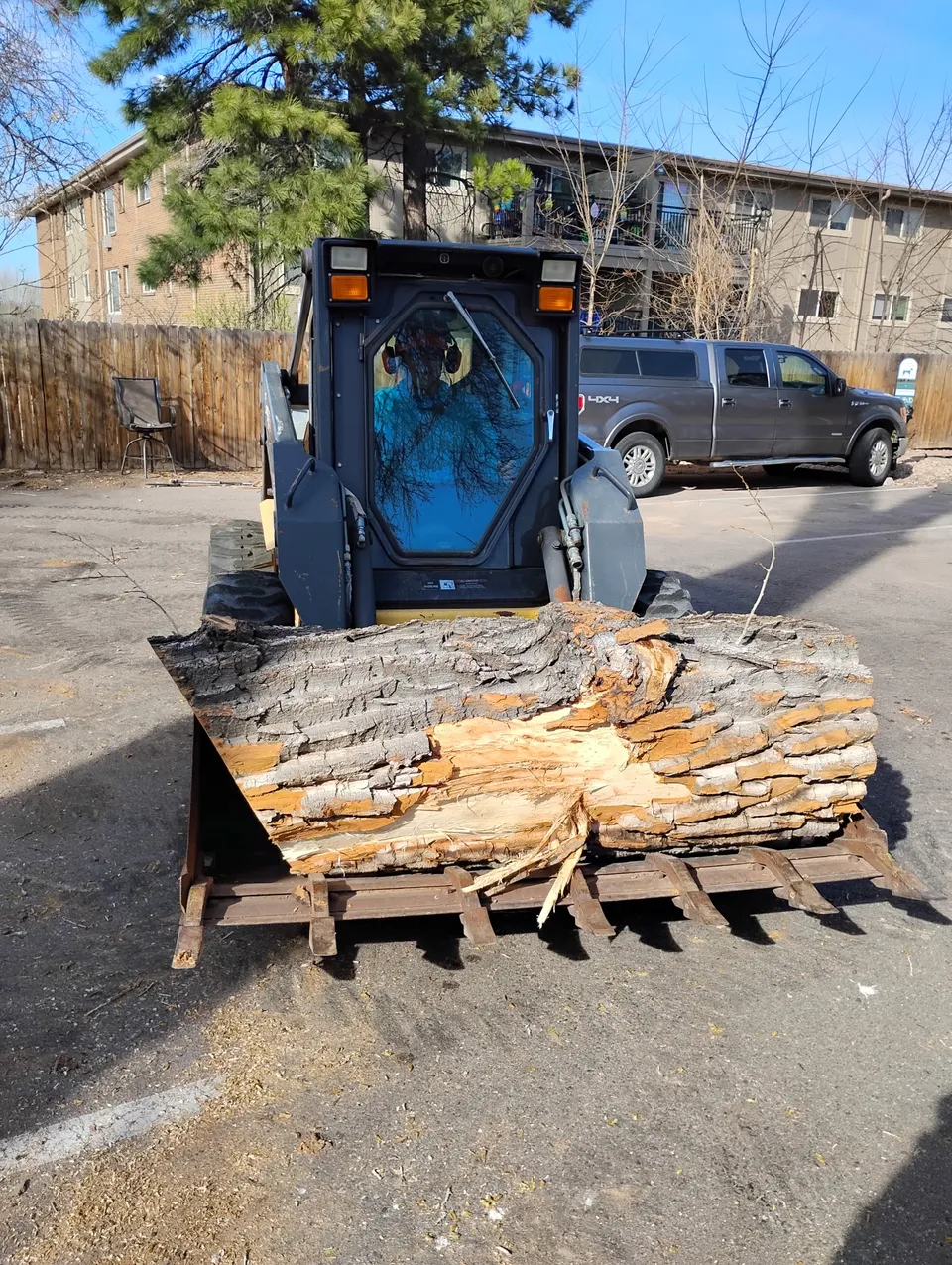
Third: healthy but badly placed conifers — dense junipers, spruces, and pines touching or overhanging the structure. A juniper against the house is an ember trap; a spruce with branches on the roof is a ladder straight to your attic. These are exactly the removals that feel hardest emotionally and matter most practically. Our tree removal crews handle tight-quarters takedowns next to structures with rigging and controlled lowering, not luck.
How Do Slopes Change the Math?
Alpenglow Tree Care treats slope as a multiplier on every distance in the zone model. Fire moves faster uphill: rising heat pre-dries and preheats the fuels above it, so a fire on a 30% grade can move at several times its flat-ground speed. If your home sits above a slope — a canyon rim lot in Boulder County, a hillside home in Evergreen or Nederland — the vegetation below your house is effectively closer than the tape measure says.
The practical adjustments: extend your defensible space farther on the downhill side, widen crown spacing on slopes beyond the flat-ground rules of thumb, and be more aggressive about ladder fuels below the home. Decks cantilevered over a slope deserve special attention — clear the vegetation beneath them completely.
What Does a Professional Fire Mitigation Crew Actually Do?
Alpenglow Tree Care runs mitigation jobs as a sequence, not a clear-cut. It starts with an assessment: we walk the property with you, map the zones, and mark specific trees for removal, limbing, or retention — you see exactly what's going and why before a saw starts. Then comes selective removal of the marked trees, limbing up of the keepers, and cutting out ladder fuels and deadfall.
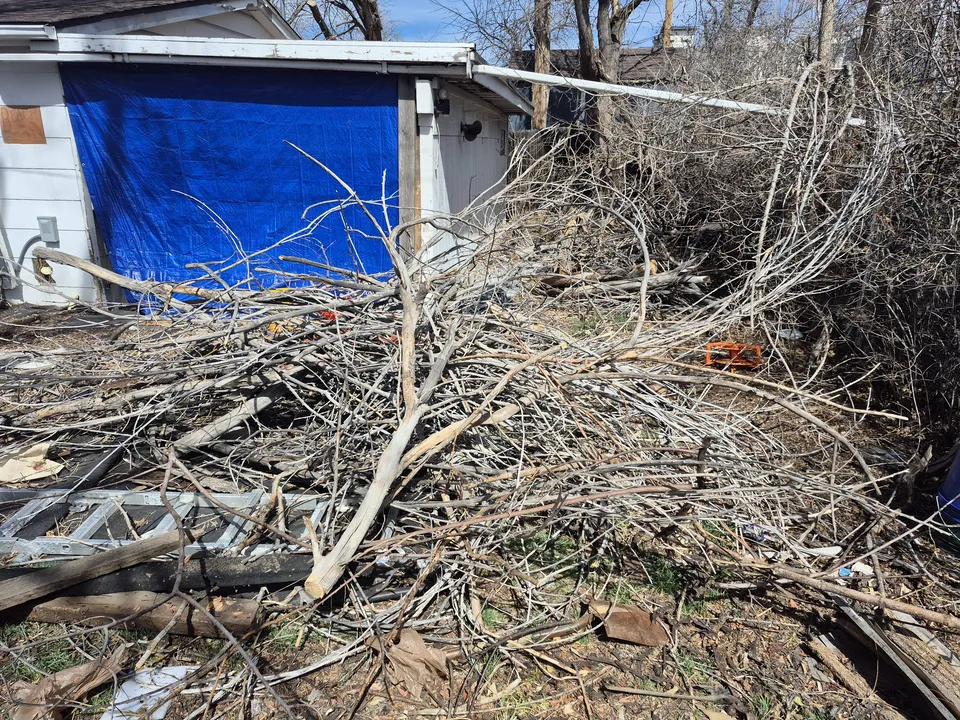
Everything we cut gets processed on site. Slash and branches go through the chipper the same day — a mitigation job that leaves slash piles behind has just rearranged the fuel, not removed it. Our chipping and mulching service turns that material into chips we can either haul off or spread as mulch in appropriate spots (kept out of the 0-5 foot zone, in layers under a few inches deep). Logs are bucked for firewood or hauled away, your call. For heavily overgrown parcels or land being prepared around new construction, this scales up into full lot clearing.
Do Insurers and Fire Districts Care About This Work?
Alpenglow Tree Care hears the insurance question on almost every foothills job now, and the honest answer is: increasingly, yes. Some Colorado insurers inspect wildfire exposure before writing or renewing policies in foothills and mountain communities, and visible mitigation — a clean immediate zone, limbed and spaced trees, no standing dead — can factor into what they're willing to offer. Document your work: keep before-and-after photos and invoices.
Your local fire district is worth a call too. Many districts along the Front Range and in the High Country offer free defensible space assessments, and some communities organize seasonal chipping days or neighborhood-scale mitigation efforts. Programs vary by district, so ask what's available where you live — mitigation works best when neighbors do it together, because embers don't respect property lines.
When Should You Do Defensible Space Work?
Alpenglow Tree Care performs fire mitigation year-round, and there's no wrong season to remove a dead tree next to your house. That said, the ideal window is before fire season peaks — late summer is when you want the work already done, not on the schedule. Fall through spring brings practical advantages: crews have more availability, low fire danger makes on-site chipping simpler, and frozen ground in winter means heavy equipment leaves less trace on your property.
The worst plan is waiting for smoke on the horizon. Once a fire is burning in the county, every tree service's phone rings at once and the highest-risk work can't be safely rushed. Walk your property this month, start with the immediate zone — most of that is a weekend of homeowner work — and bring in a crew for the trees.
Common Questions About Defensible Space in Colorado
How far should trees be from my house in Colorado?
Keep the first 5 feet around the house completely free of flammable vegetation, and never let branches overhang the roof or touch siding. From 5 to 30 feet, conifers should be limbed up and spaced so their crowns do not touch — roughly 10 feet between crowns on flat ground, wider on slopes. Dense conifers inside 30 feet that cannot be spaced properly are usually better removed.
What are ladder fuels and why do they matter?
Ladder fuels are the vertical chain of vegetation — tall grass, shrubs, and low tree branches — that lets a ground fire climb into the tree canopy. Once fire reaches the crowns it burns hotter, moves faster, and throws embers much farther. Removing shrubs under trees and limbing branches up 6 to 10 feet breaks that ladder and keeps fire on the ground where it is easier to stop.
Does defensible space work help with homeowners insurance in Colorado?
It can. Some Colorado insurers now inspect wildfire exposure before writing or renewing policies in foothills and mountain communities, and documented mitigation work — cleared zones, limbed trees, removed deadfall — can factor into those decisions. Many local fire districts also offer free defensible space assessments. Keep photos and invoices from your mitigation work, and ask your insurer and fire district what they look for.
When is the best time of year to do fire mitigation in Colorado?
Fire mitigation work can be done year-round in Colorado, but finishing before fire season peaks in summer is ideal. Fall through spring is often the best window — crews are more available, low fire danger makes chipping safer, and frozen or dry ground reduces impact on your property. Do not wait for a red flag warning to start; the work takes time and the calendar fills up fast once smoke is in the air.
Last Updated: August 2026